The Essence of Kyoto: A Slow Travel Guide to Japan’s Quiet Soul
- roamapy
- Mar 7
- 6 min read
Kyoto is not a city that reveals itself quickly.
Unlike Tokyo’s electric energy or Osaka’s relentless appetite for life, Kyoto unfolds slowly, almost deliberately. Its beauty lives in quiet gestures: the soft creak of wooden floors in a century-old tea house, the delicate scent of incense drifting from a temple gate, the moment morning light filters through bamboo leaves.

Slow travel in Kyoto is not about ticking off famous temples or rushing through a packed itinerary. It is about allowing the city’s rhythm to guide you. It means wandering narrow streets without a destination, sitting in silence in a Zen garden, and lingering over a cup of matcha while the world outside fades into calm.
Kyoto is not simply a destination.
It is a state of mind.
Why Kyoto Is Perfect for Slow Travel
Few places in the world embody the philosophy of slow travel as naturally as Kyoto.
For more than a thousand years, the city served as Japan’s imperial capital. During this time, it became the cultural heart of the country—home to tea ceremonies, Zen Buddhism, refined cuisine, poetry, calligraphy, and traditional craftsmanship.
Even today, Kyoto retains this sense of quiet continuity.
While modern life moves quickly elsewhere, Kyoto encourages something different: observation, patience, and appreciation of subtle beauty.
In Japanese culture, this aesthetic sensibility is often described through the concept of wabi-sabi—the art of finding beauty in imperfection, simplicity, and transience.
Kyoto is filled with moments that embody this philosophy.
A stone path worn smooth by centuries of footsteps.A maple leaf drifting across the surface of a temple pond.A geisha disappearing into a lantern-lit alley.
These are not dramatic experiences.
Yet they stay with you long after you leave.
A Quiet Morning in Arashiyama
The best way to begin a day in Kyoto is early.
Before the city fills with visitors, Kyoto belongs to the quiet.
Arashiyama, located on the western edge of the city, is one of Kyoto’s most atmospheric districts. While it becomes crowded later in the day, arriving at sunrise transforms the experience entirely.
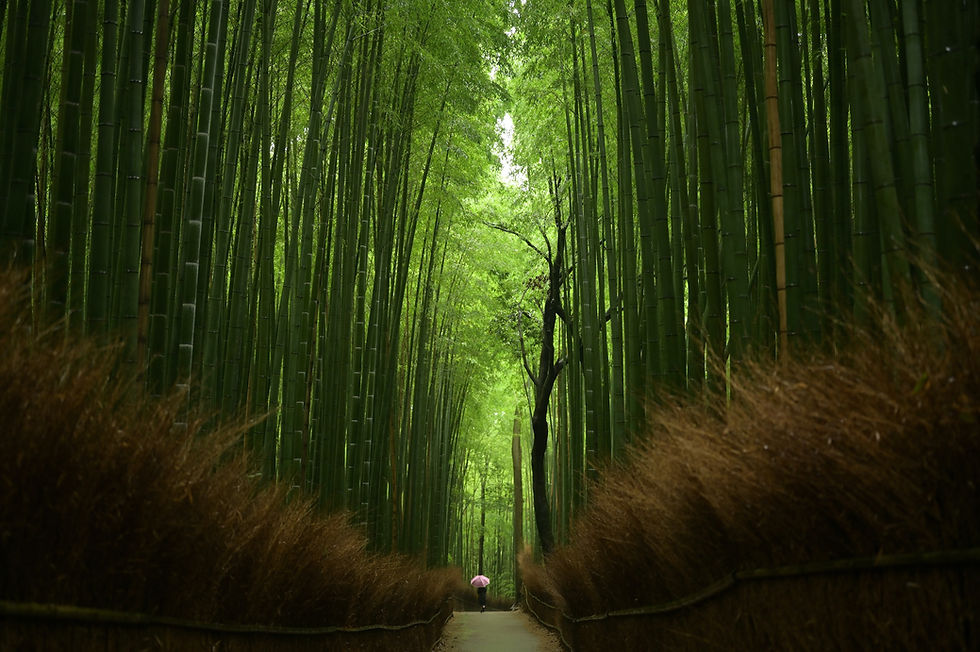
As the first light touches the mountains, the Arashiyama Bamboo Grove becomes a place of almost surreal stillness.
Tall bamboo stalks rise like green pillars toward the sky, swaying gently in the morning breeze. The sound of bamboo leaves brushing against each other creates a soft, whispering rhythm.
Walk slowly through the path.
Notice how sunlight filters through the canopy.Listen to the subtle music of wind through bamboo.
This is Kyoto at its most peaceful.
Nearby, the Tenryu-ji Temple gardens offer another moment of calm. Designed in the 14th century, the landscape garden remains remarkably unchanged.
The pond reflects distant mountains, creating a natural harmony between architecture and landscape.
Experience Arashiyama With a Local Guide
If you want a deeper understanding of the area’s history and hidden spots, a guided walk can transform the experience.
→ Check Arashiyama walking tours
→ See bamboo forest photography tours
These small-group tours often include quiet temple stops that many visitors miss.

The Poetry of Kyoto’s Temples
Kyoto is home to more than 1,600 Buddhist temples and 400 Shinto shrines.
But rather than attempting to visit many, slow travel suggests something different: visit fewer places and experience them deeply.
One of the most contemplative places in Kyoto is Ryoan-ji, home to Japan’s most celebrated Zen rock garden.
At first glance, the garden appears almost minimal—fifteen stones arranged across white gravel.
Yet the longer you observe, the more the garden begins to reveal itself.
From any angle, one stone always disappears from view, encouraging reflection on perception and balance.
Another extraordinary temple is Ginkaku-ji, often called the Silver Pavilion.
Unlike the golden brilliance of its famous counterpart, Ginkaku-ji embraces quiet elegance. Its moss gardens, winding paths, and carefully raked sand forms create a tranquil atmosphere deeply connected to nature.
Walking here feels less like sightseeing and more like meditation.
Kyoto Temple & Cultural Tours
If you want to see Kyoto’s most iconic temples without planning everything yourself, curated tours can be helpful.
→ Browse Kyoto temple tours
→ Check Kyoto cultural walking experiences
Many include visits to Kinkaku-ji, Fushimi Inari Shrine, and Gion District.

Wandering the Streets of Higashiyama
One of the most rewarding ways to experience Kyoto is simply by walking.
The district of Higashiyama offers some of the city’s most atmospheric streets—lined with wooden townhouses, traditional shops, and hidden courtyards.
Early morning or late afternoon is the best time to wander here.
Stone steps lead upward toward temples while narrow alleys reveal tiny tea houses and artisan boutiques.
Stop occasionally.
Step inside a small ceramics shop.Browse handmade incense.
Watch a craftsman shaping delicate pottery.
These quiet encounters are the true essence of Kyoto.
One of the most magical moments in Higashiyama happens at sunset when the streets glow with warm lantern light.

The Ritual of the Tea House
No experience captures Kyoto’s cultural soul quite like the tea ceremony.
The Japanese tea ceremony (chanoyu) is not simply about drinking tea. It is a carefully choreographed ritual reflecting centuries of philosophy and hospitality.
Everything has meaning.
The texture of the tea bowl.The movement of the host.
The quiet sound of water heating.
Participating in a tea ceremony encourages a deeper awareness of the present moment.
Time slows.
Conversations soften.
Even the act of holding a bowl of matcha becomes mindfulness.
Traditional Tea Ceremony Experience
Visitors can join authentic tea ceremonies hosted by local tea masters.
→ Book a Kyoto tea ceremony experience
→ Explore matcha tasting experiences
These experiences are often held inside historic tea houses in Gion or Higashiyama.

Kyoto’s Slow Food Culture
Kyoto’s cuisine reflects the same philosophy of subtlety and balance that defines the city itself.
Traditional kaiseki dining originated here.
A kaiseki meal is a multi-course experience built around seasonality, color, texture, and presentation.
Rather than overwhelming the senses, kaiseki emphasizes harmony.
Each dish arrives like a small piece of art.
Kyoto is also famous for matcha desserts, tofu cuisine, and traditional sweets called wagashi.
Stopping at a small tea café for matcha and seasonal sweets is one of the city’s simplest pleasures.
Food Experiences in Kyoto
For travelers who want to explore Kyoto’s culinary culture:
→ Browse Kyoto food tours
→ See Kyoto cooking classes
These often include visits to Nishiki Market, Kyoto’s historic food street.
Where to Stay: Boutique Stays in Kyoto
Where you stay shapes the Kyoto experience.
Rather than large international hotels, Kyoto is best enjoyed through smaller boutique accommodations that reflect the city’s aesthetic.
Traditional ryokan inns offer the most immersive stay.
Tatami floors, sliding paper doors, futon bedding, and seasonal meals create an atmosphere deeply connected to Japanese tradition.
Modern boutique hotels reinterpret these elements through contemporary design.
Recommended Boutique Hotels in Kyoto
Luxury Boutique
→ Aman Kyoto
→ Hoshinoya Kyoto
Design Hotels
→ Ace Hotel Kyoto
→ The Shinmonzen
Traditional Ryokan
→ Tawaraya Ryokan
→ Hiiragiya Ryokan
These properties combine traditional craftsmanship with exceptional hospitality.

Practical Planning for Kyoto
Getting around Kyoto is relatively easy.
The city’s buses and trains connect most major attractions, but many neighborhoods are best explored on foot.
For visitors planning multiple attractions, travel passes can simplify transportation.
→ Check Kyoto transport passes
→ Browse JR Pass options
Bike rentals are also a popular way to explore the city slowly.
When to Visit Kyoto
Each season transforms Kyoto.
Spring (March–April): Cherry blossom season.
Summer (June–August): Lush gardens and festivals.
Autumn (October–November): Fiery maple leaves and temple gardens.
Winter (December–February): Quiet temples and fewer crowds.
Autumn and winter often offer the most contemplative atmosphere for slow travelers.
Kyoto as a Place of Healing
There is something quietly restorative about Kyoto.
Perhaps it is the presence of ancient temples.Perhaps it is the gentle rhythm of daily life.
Or perhaps it is simply the beauty of a city that values stillness.
Travel today often feels rushed.
Cities blur together. Experiences become lists to complete.
Kyoto invites the opposite.
Here, travel becomes slower, deeper, and more reflective.
Final Thought
Kyoto does not demand attention.
It whispers.
The city’s beauty reveals itself gradually—through quiet discoveries rather than spectacle.
If you approach Kyoto slowly, without hurry or expectation, you may find something unexpected.
Not just a beautiful destination.
But a rare kind of calm.


